What does treatment court software need to do between sessions?
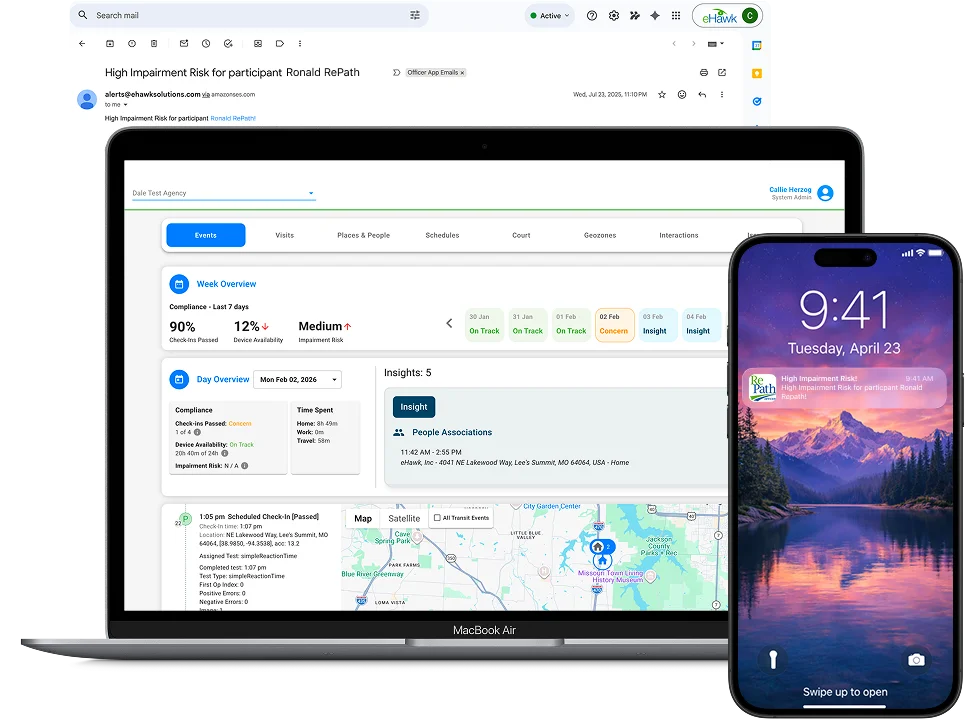
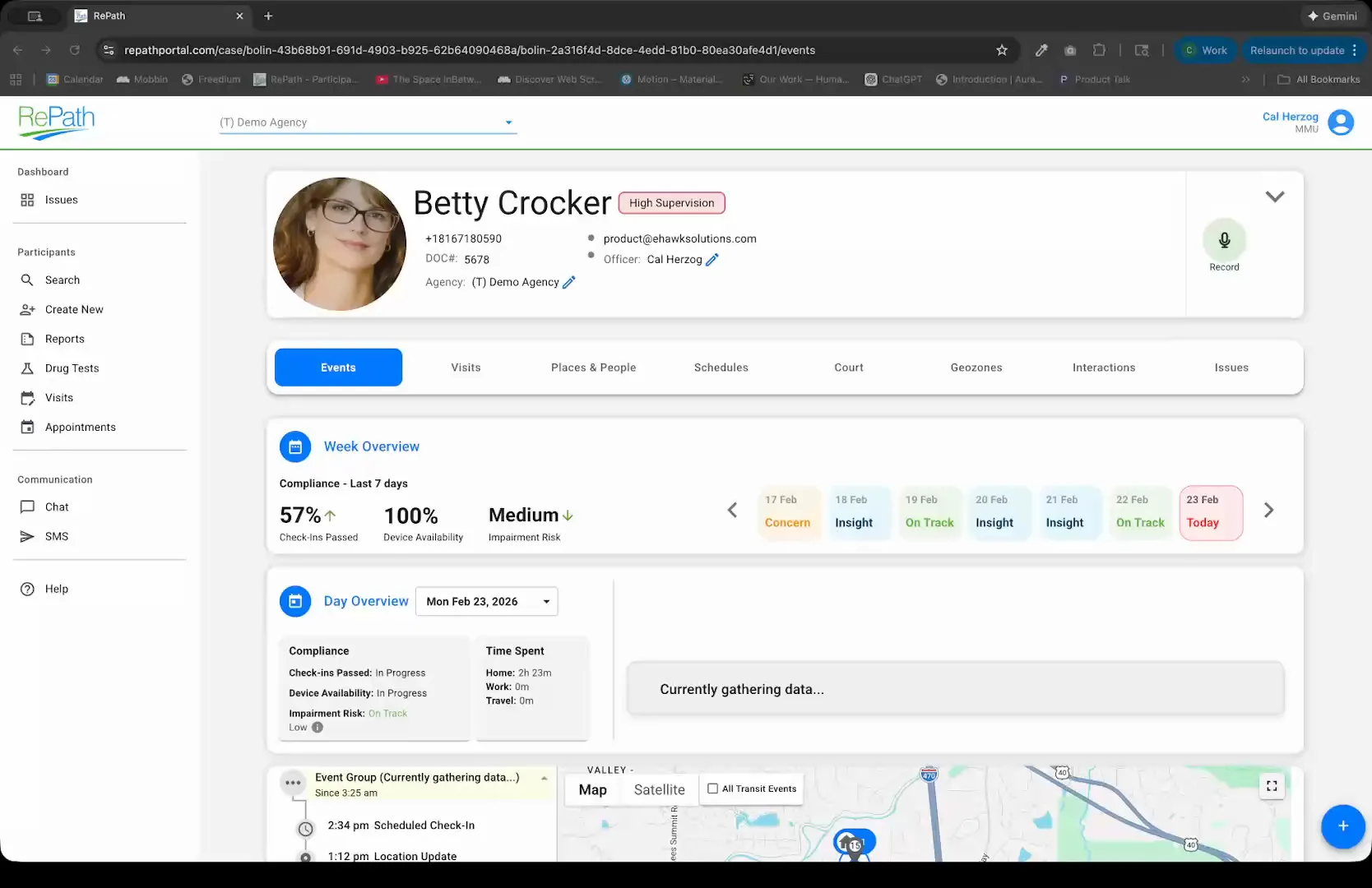
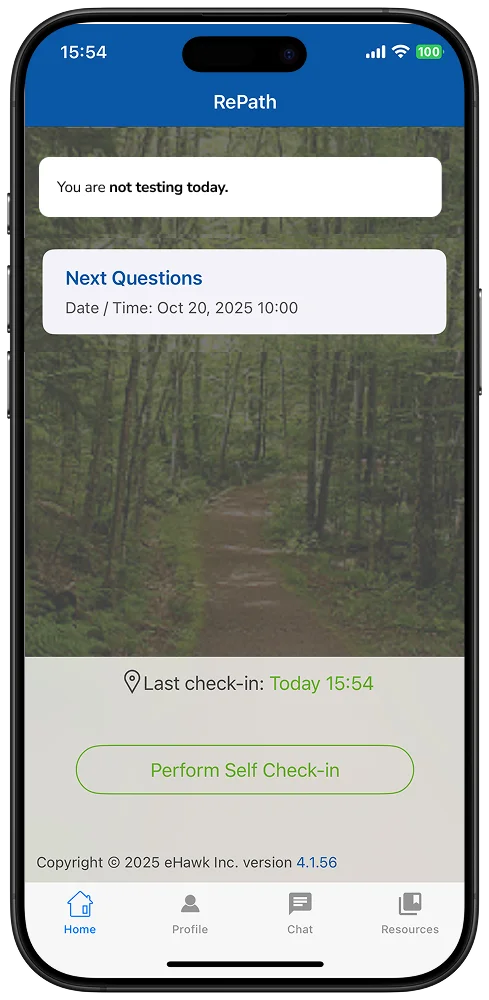
Show the team what happened before staffing. That means daily check-ins, curfew and zone results, test scheduling and attendance, impairment flags, and the participant's locations over time, on one record. RePath does that from the phone the participant already carries, so the court knows about the missed check-in on Tuesday, not at Thursday's staffing.
How does drug court participant tracking work in RePath?
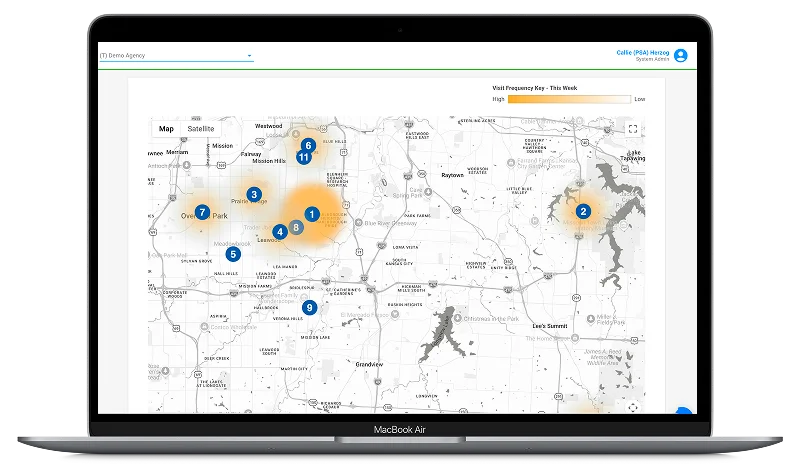
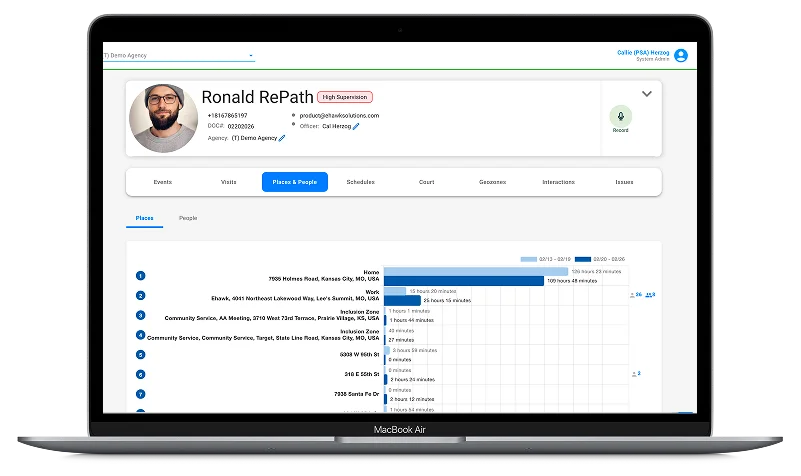
Each participant checks in daily with a photo and location. The court sets curfew windows and exclusion zones. People and Places shows who was with whom, where, and for how long. Employment and treatment check-ins are logged as they happen. The team sees it in RePath IQ each morning, sorted by who needs attention.
How does treatment court compliance tracking work?
Every requirement the court sets becomes something the phone tracks: check-ins, curfew, zones, drug test scheduling and attendance, treatment attendance, self check-ins. Results land on the participant's record the same day. In one Kansas drug court, 90% of participants held 75% compliance or better.
What reporting tools do treatment courts get?
A compliance report per participant, on demand, for any date range: check-in rate, test results, curfew and zone results, attendance, flags. Directors pull it before sanctions are decided. Missouri produced more than 17,000 of these reports in a year with one complaint on record.
Can specialty court programs automate the routine work?
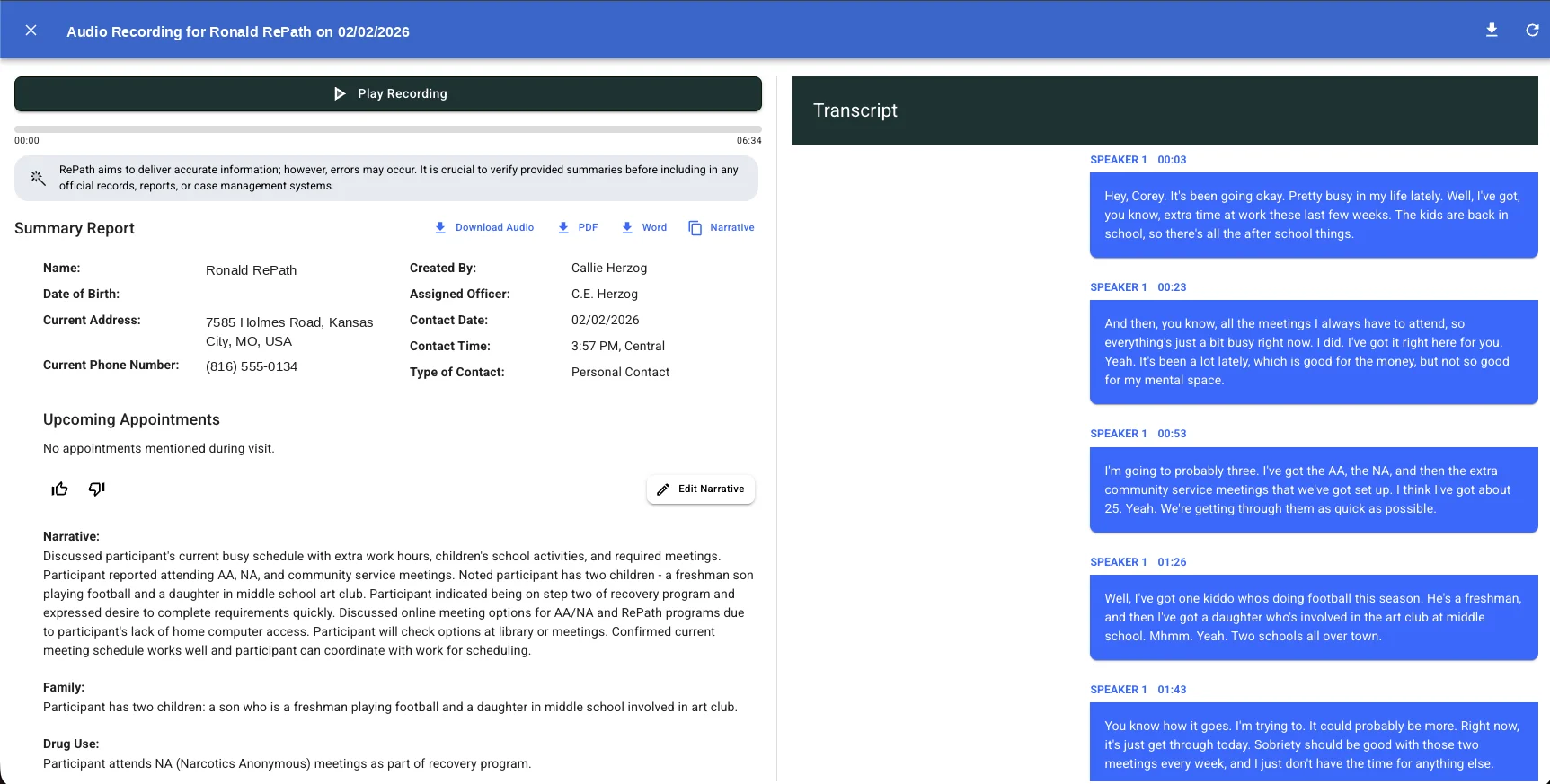
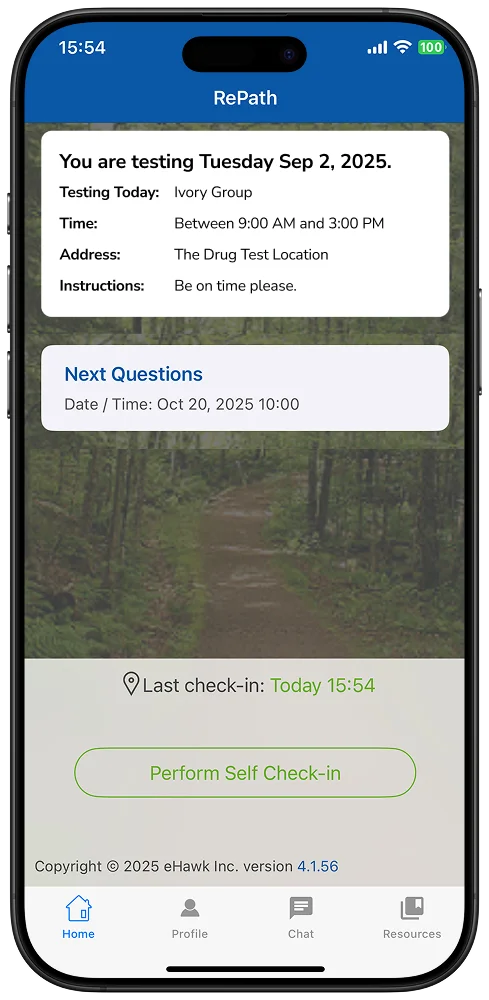
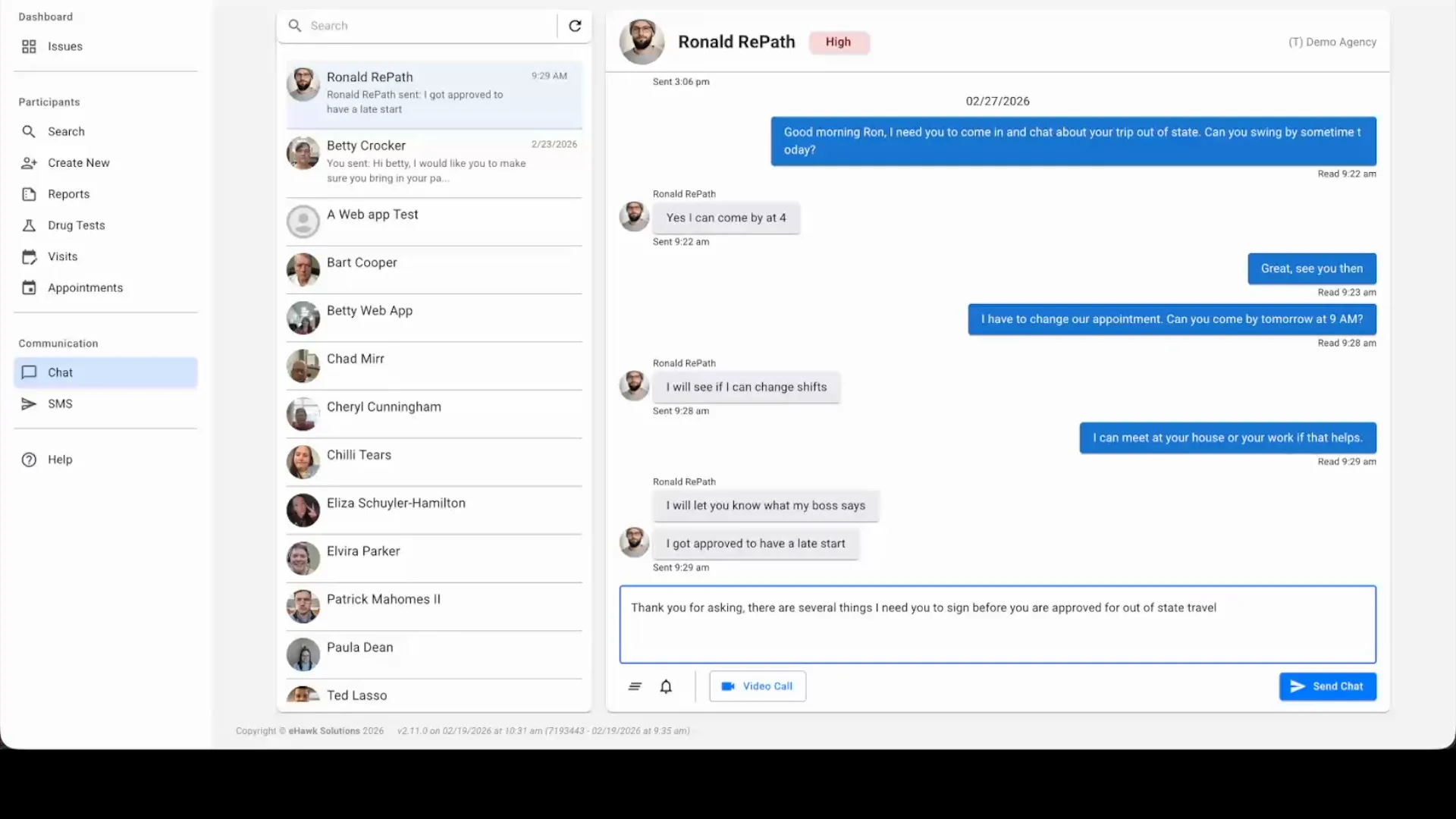
Yes. Automated drug test scheduling, including randomized color codes, replaces the morning voicemail. Court date and appointment reminders go out on their own. One message reaches the whole docket. Visit Assist turns a recorded visit into the note. One drug court coordinator got about 75 minutes a week back from test scheduling alone.
Does RePath work for diversion programs and accountability courts?
Yes, on the same tools as drug court. Diversion, accountability, veterans, mental health, and domestic violence dockets all run on RePath, so a county with several specialty programs runs them on one platform.
Is RePath drug court software or a case management system?
Drug court supervision software. RePath is not a case management system and does not try to be one. It runs the supervision between sessions and works alongside the case management system the court already has.
Does RePath replace drug testing?
No. It directs testing. When Impairment Risk flags someone as high risk and they get tested, three in four come back positive, so the court tests when it matters instead of at random. Automated test scheduling, including randomization, runs through RePath as well.
How do treatment courts use the compliance data in court?
Directors pull reports on demand to see who is below the required participation percentage before sanctions are decided, and judges address RePath compliance from the bench. In one Missouri circuit the prosecutor uses the compliance score for incentives.
Does it work for veterans and mental health courts?
Yes, on the same tools. A Kansas veterans court and a Georgia mental health court both run on RePath. The proof set for those court types is thinner than for drug courts, and we will say so.