Community corrections technology, explained
By the RePath team at eHawk, Inc. · Updated September 16, 2026
What is community corrections technology?
Community corrections technology is the set of tools agencies use to supervise people who are living in the community rather than in a facility: people on probation, parole, pretrial release, or in a treatment or specialty court program. It answers four questions for the officer: where is this person, are they meeting their conditions, what happened at our last contact, and who on my caseload needs attention today.
Four kinds of tools do most of that work, and most agencies run more than one:
- Case management systems. The record of the case: conditions, contacts, notes, court dates. Usually state or county owned, often decades old, and the system every other tool has to feed.
- Electronic monitoring hardware. Ankle monitors and other worn devices that report location. They answer the "where" question and nothing else.
- Reporting kiosks and phone reporting. Low-intensity check-ins for low-risk caseloads. Cheap, but they produce almost no information.
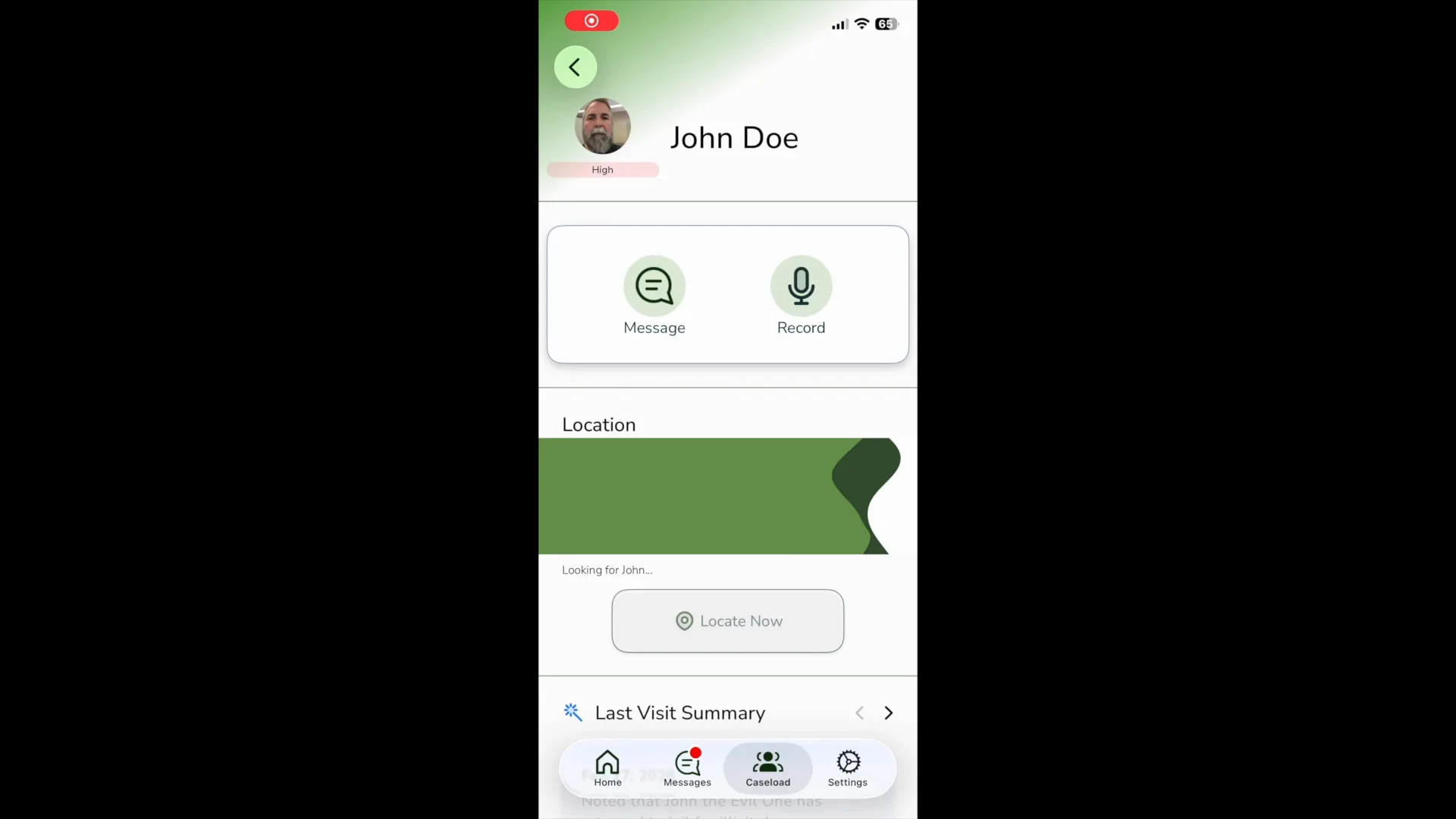
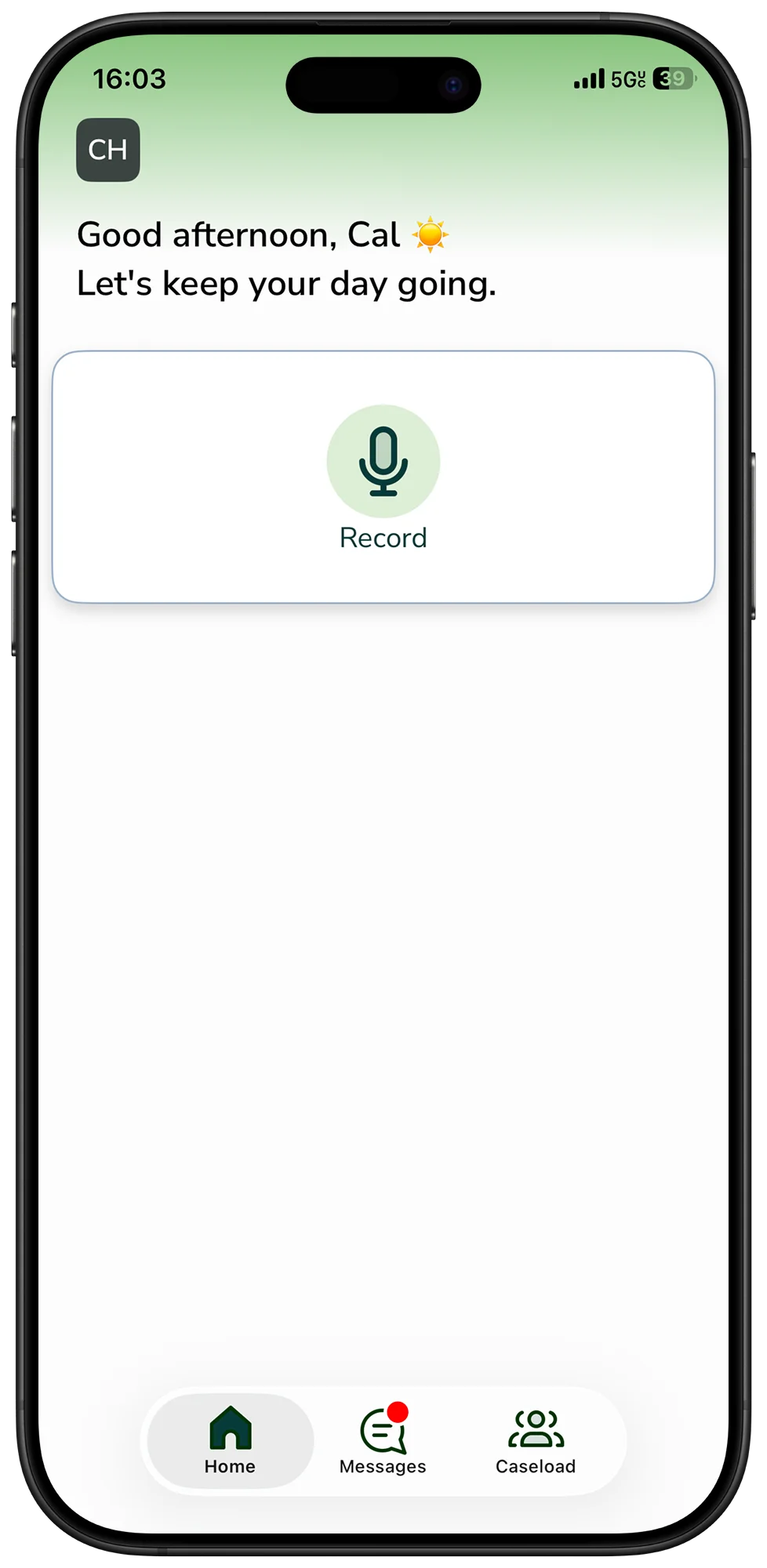
- Smartphone-based supervision. An app on the phone the person already carries: check-ins, reminders, location context, two-way messaging, and increasingly, documentation and analytics for the officer.
What is smartphone-based supervision?
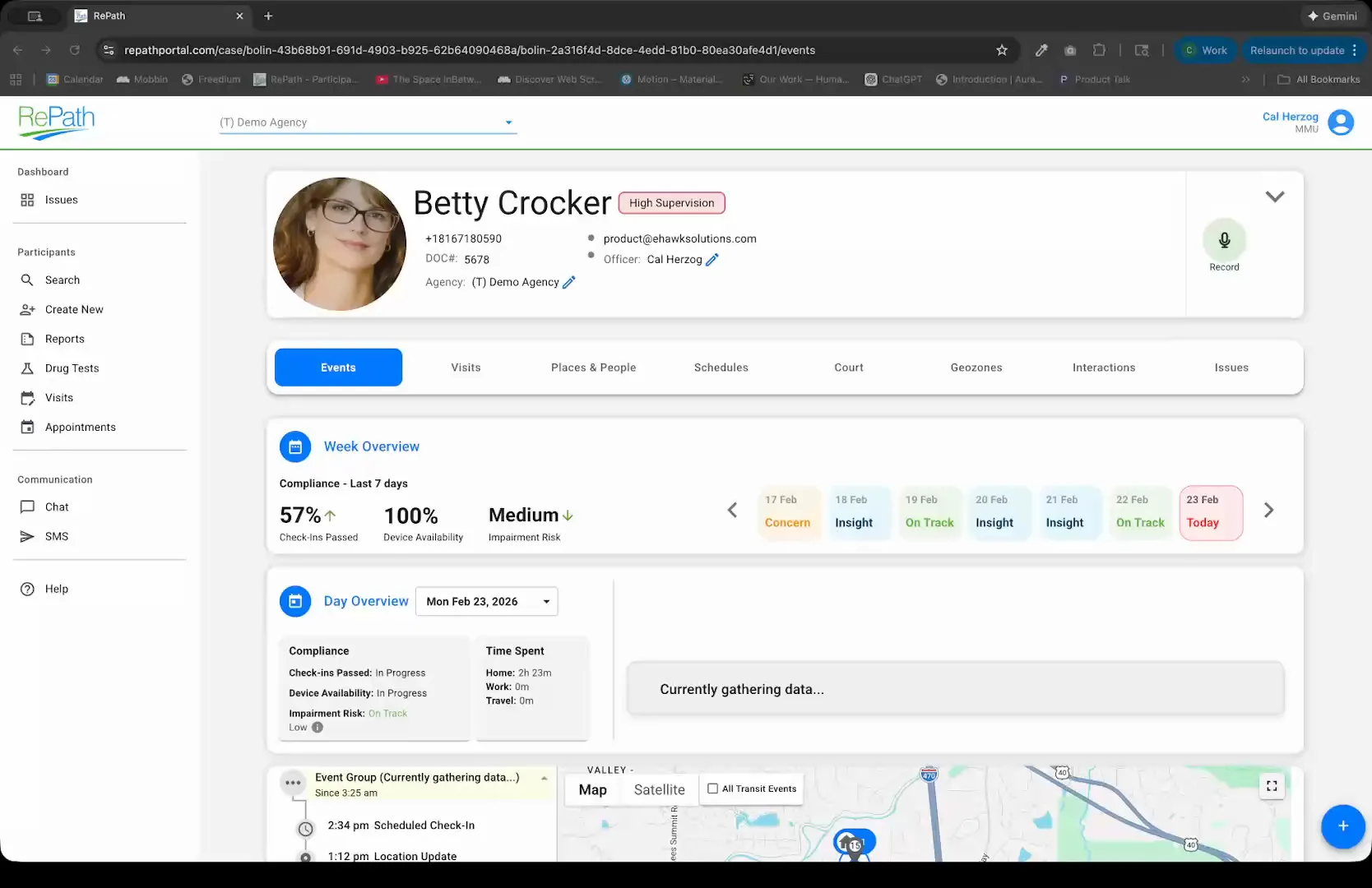
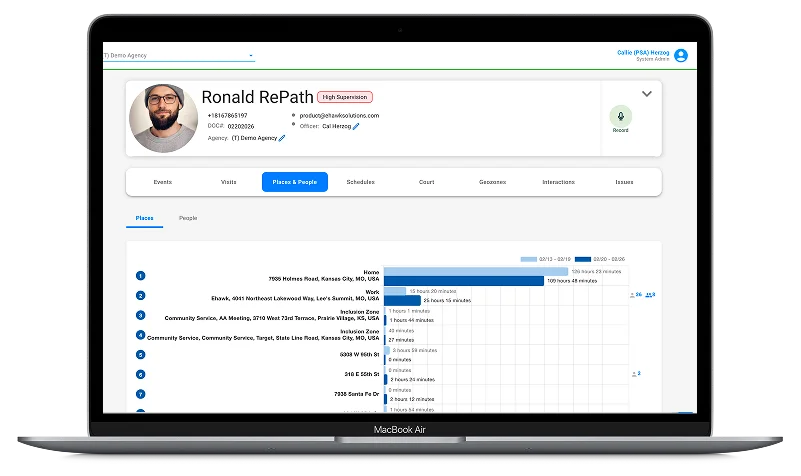
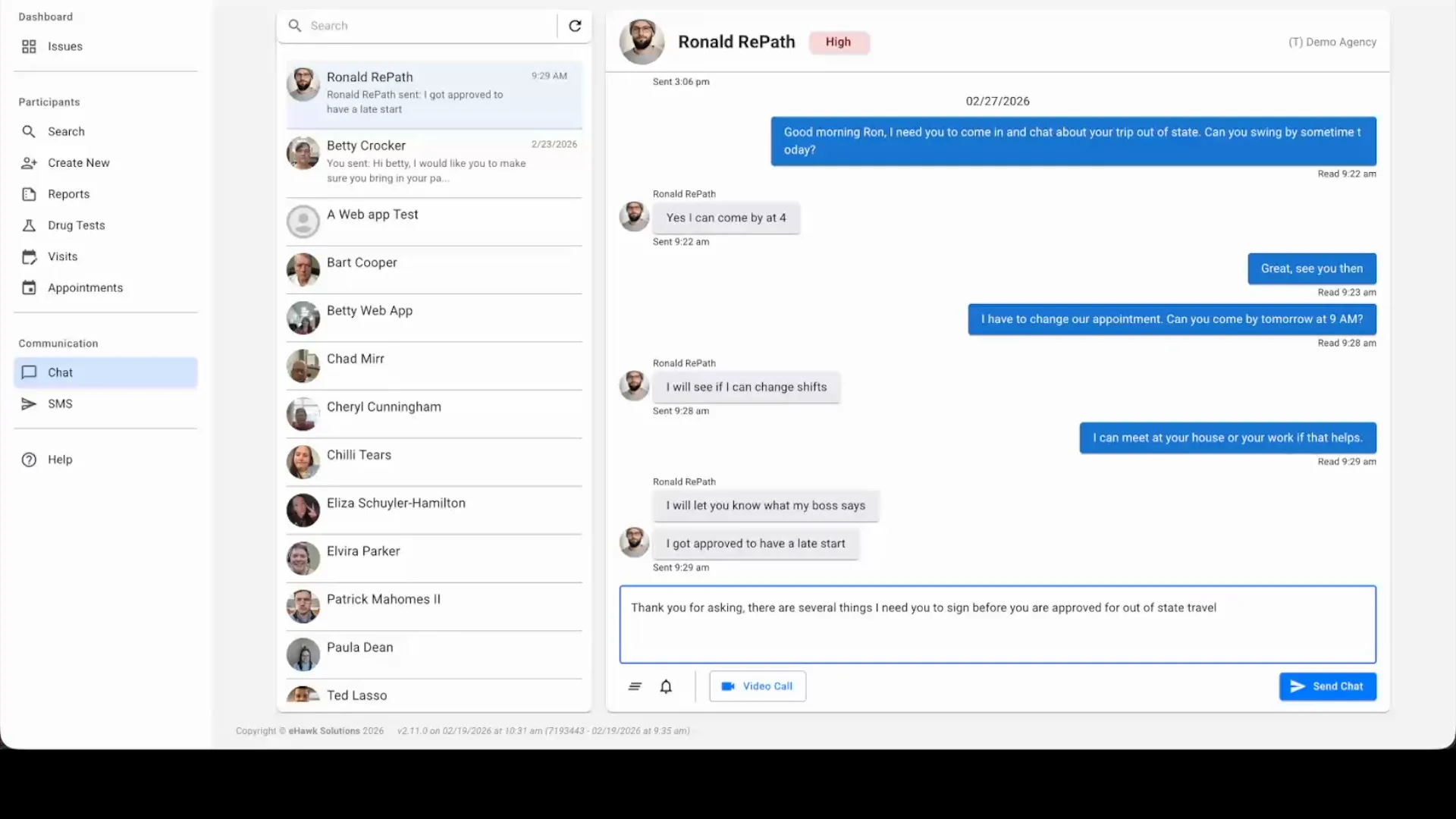
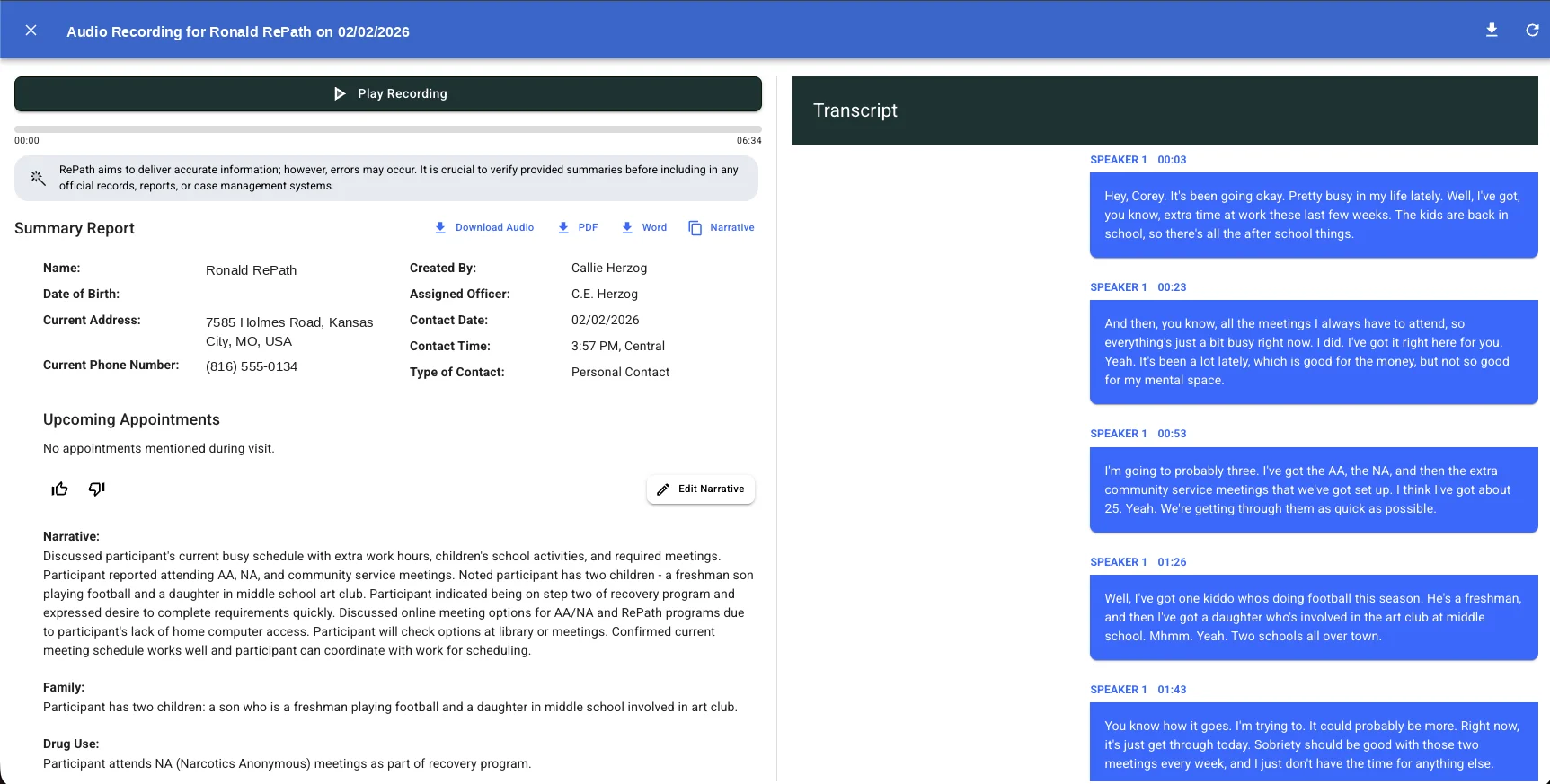
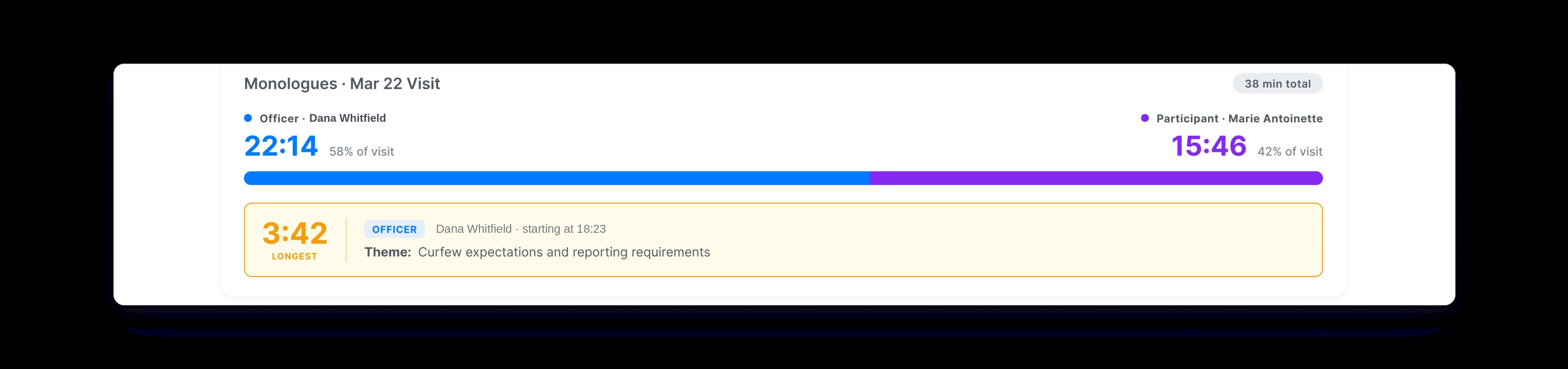
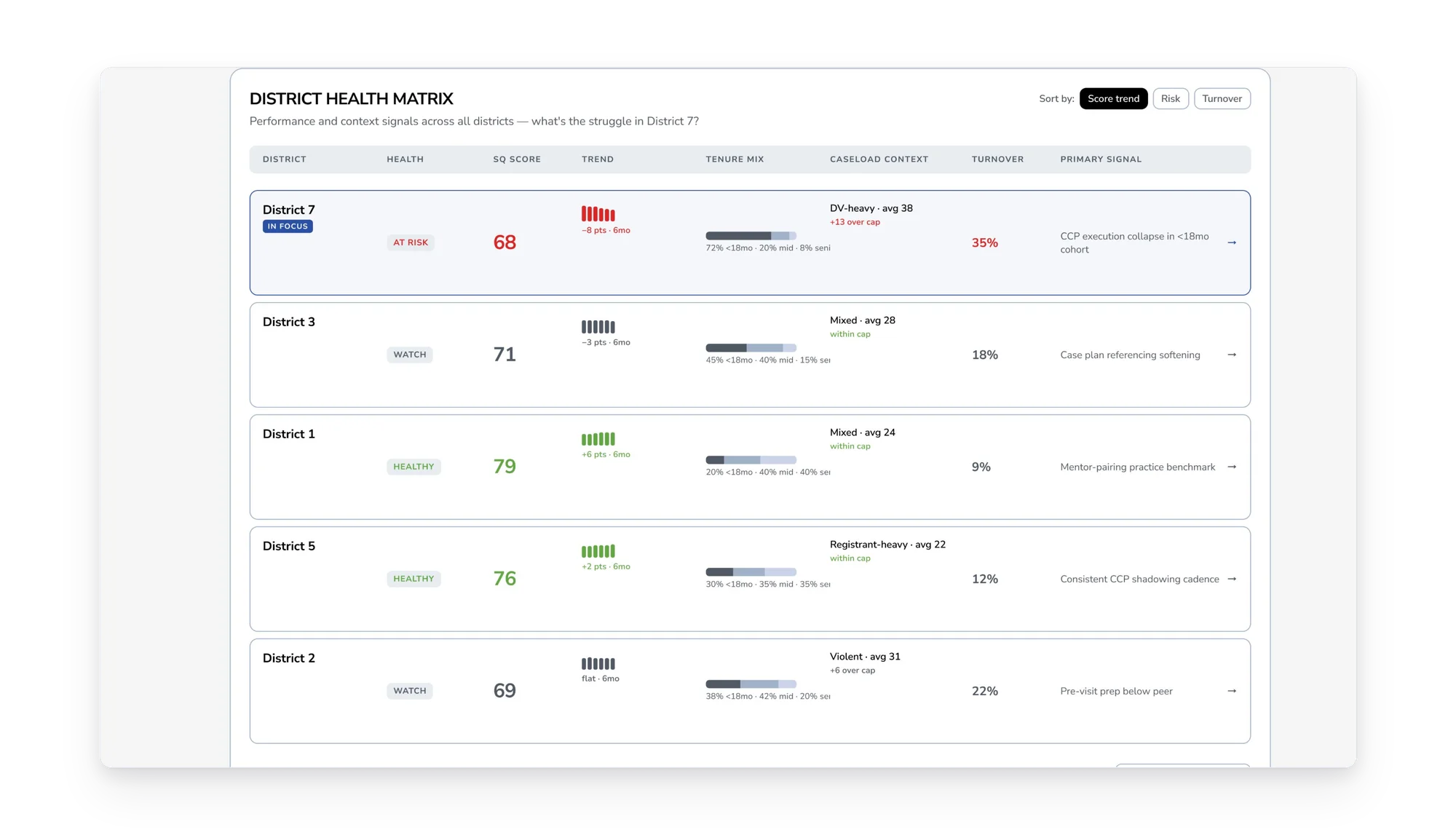
Smartphone-based supervision (we call it mobile supervision) moves routine supervision onto the participant's own phone. The participant checks in, gets reminders for court dates and appointments, and messages their officer from the app. The officer sees location context, compliance history, and the whole conversation in one place, and can record a visit and get the note written. Supervisors see caseload trends and, on some platforms, practice-quality signals from those visits.
It is not electronic monitoring, and agencies that treat it as a cheaper ankle monitor tend to be disappointed. An ankle monitor tells you where a leg is. A phone tells you where a person is, whether they checked in, what they said, and whether they showed up to court. The trade is that the participant can leave the phone behind. In practice, officers report the opposite problem: people keep doing things they are not supposed to do with the phone in their pocket, so the officer sees it.
Who buys it, and what they are trying to fix
The buyer is usually a chief probation officer, a court administrator, a pretrial services director, or a state corrections leader. The problem is almost never "we need an app." It is one of these:
- Officers have no time. One corrections agency ran a time study on its officers before it ever talked to a vendor and found 72.7% of their time going to administrative and system work. Only 18.7% went to actually supervising people.
- Positions are vacant and will stay vacant. A state department of corrections had about 30 open positions it could not fill. It funded a statewide contract from that salary line after measuring the officer hours a pilot returned.
- People a judge has already released are sitting in jail. Because the only supervision option is a monitor they cannot pay for. A large Missouri county cut pretrial jail days by more than 60% in a year by changing that.
- Hardware the agency cannot afford to lose. One rural Ohio county lost $2,500 every time an ankle monitor did not come back. It has lost one rental phone in the life of its RePath program.
- Nobody can see practice quality. A supervisor audits one file per officer per month. Everything else is a contact count.
What to evaluate before you buy
Seven questions separate a tool that changes the agency from a tool the agency has to manage. Ask every vendor the same seven, including us.
- Will officers actually use it? Ask for adoption numbers from a live agency, not a pilot. Ask what percentage of the caseload is enrolled and what percentage of officers said keep it.
- What does it do to officer time, in hours? Get a number in hours per officer per week and the agency it came from. Percentages hide the denominator.
- Does it write the note? Documentation is where the hours are. If the tool adds a screen without removing the write-up, it adds work.
- How does it connect to the case management system? Ask for the honest answer: copy and paste, an integration API, or a built connection to your specific system. Anyone who says "seamless" has not integrated with a state CMS.
- What does the participant pay? If the answer is anything, the program excludes the people it was built for.
- Where does the data live and who can see it? SOC 2 Type II, encryption at rest and in transit, hosting region, retention and deletion, and what happens to your data if the vendor is acquired.
- Can you talk to a customer who lost the product and came back? That reference has already run the counterfactual.
Where RePath fits, and where it does not
RePath is a smartphone-based supervision platform built by eHawk, Inc. It fits an agency that wants officer time back, wants to supervise people it cannot afford to put on hardware, or wants a court-defensible record of what happened between contacts. It runs pretrial dockets, probation and parole caseloads, treatment and specialty courts, and juvenile programs, from a two-county rural circuit to statewide contracts.
It is not the right tool for every situation. It does not replace a case management system. It does not put a device on someone who has no phone, though agencies run email-only reporting for that case and one state department chose that route. It is not a substitute for drug testing; Impairment Risk directs testing toward the moments it is most likely to matter. And a location record from a phone is not the same instrument as a worn device for the small number of cases where a court has ordered one.
What community corrections agencies actually do with it
County community corrections agencies tend to run three or four programs on one platform: adult intensive supervision, drug or recovery court, juvenile services, and sometimes pretrial. One four-county rural district in Kansas runs all of them on RePath; its officers produced 252 visit summaries in a single month. A Kansas community corrections director described the before state as "if someone missed an appointment and didn't answer, we were just left guessing," and the after state as "if we dropped RePath tomorrow, my staff's jobs would instantly become harder."
The specific stories by court type are on their own pages: probation and parole, pretrial services, treatment and specialty courts, and juvenile services. The comparison a lot of agencies start with is RePath vs ankle monitors.