Officers now get coaching after every visit, not a few files a quarter
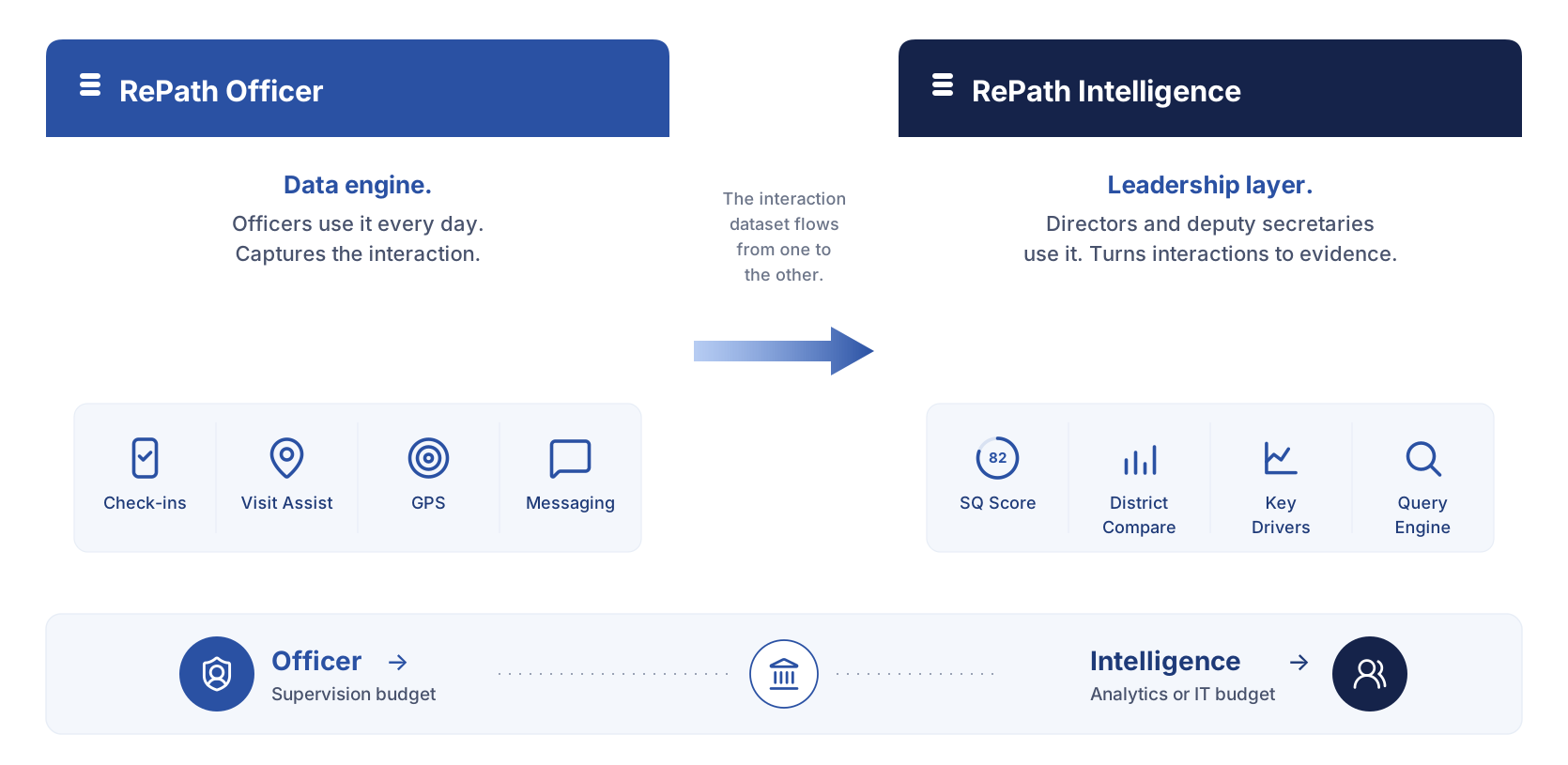
RePath Intelligence reads every recorded contact. Officer Coach turns it into feedback the officer sees before they leave the driveway.
Agencies spend real money training officers in core correctional practices. The research is clear that the training reduces reoffending. It is equally clear that it only works when officers actually use those skills in real conversations. Almost nobody measures whether they do.
Training only works if the skills get used
The reason is the method. Quality assurance today means a supervisor pulls a handful of recordings, often once a quarter. Officers frequently pick which ones get reviewed. And people work differently when they know someone is watching. So the sample is small, it is late, and it is not the actual work.
You cannot coach a team on that.
Intelligence reads every contact
RePath Intelligence evaluates every recorded visit across three layers: whether the contact met the compliance requirement, whether it had structure, and whether core correctional practices showed up in the conversation.
For each practice, it records one of four things. The practice was applied. It was attempted and could be stronger. There was an opening and the officer missed it. Or the situation never called for it.
That distinction is the part quarterly review cannot produce. "Never tried it" and "tried it and fumbled it" need completely different coaching, and a scorecard that only counts yes and no cannot tell them apart.
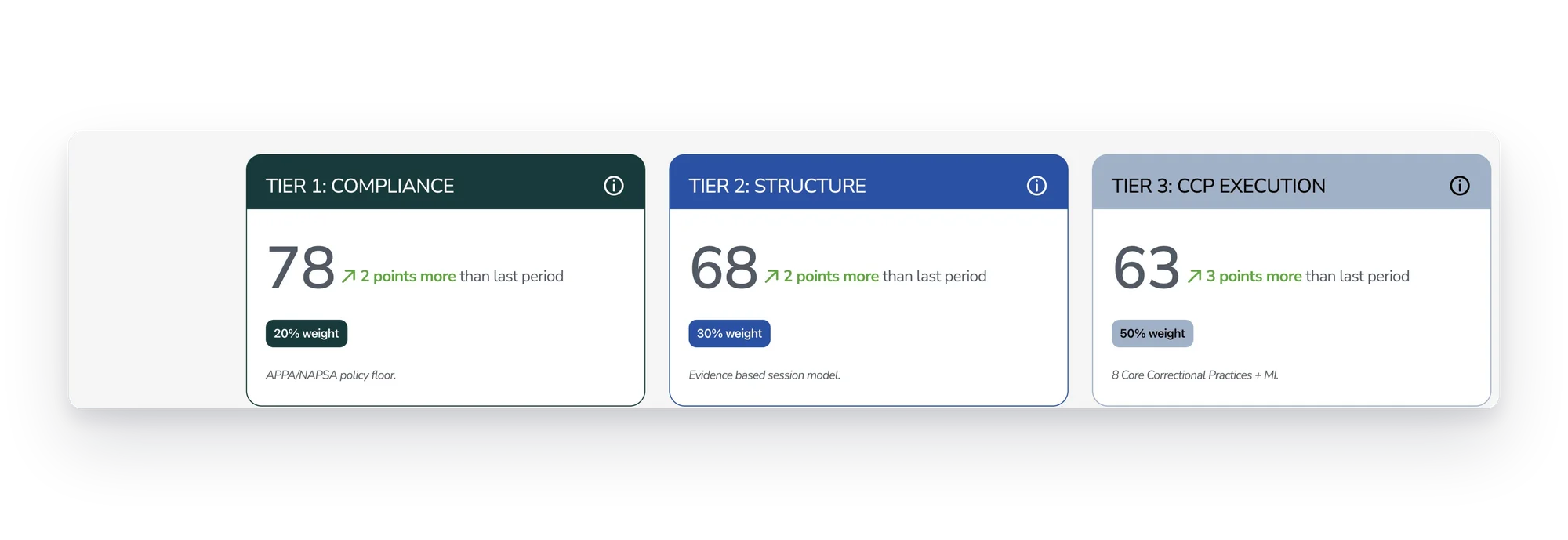
It also means a supervisor stops guessing. Intelligence pulls every contact together into a view of what each officer is actually working on and where they need to focus. Not a sample. Not an impression from the one ride along you managed last month. The whole caseload, current.
Officer Coach puts it in the officer's hands
Officer Coach is the officer's view, and it is the new part.
The feedback arrives right after the visit is recorded, while the officer is already writing up the note. That timing is deliberate. It is one more thing to read during a task they are already doing, not a separate workflow to remember.
The report opens with what the officer did well. Then one specific tip: what the opportunity was, what they could have said instead, why it matters to the person in front of them, and what it is meant to change. Then a single next step for the next visit.
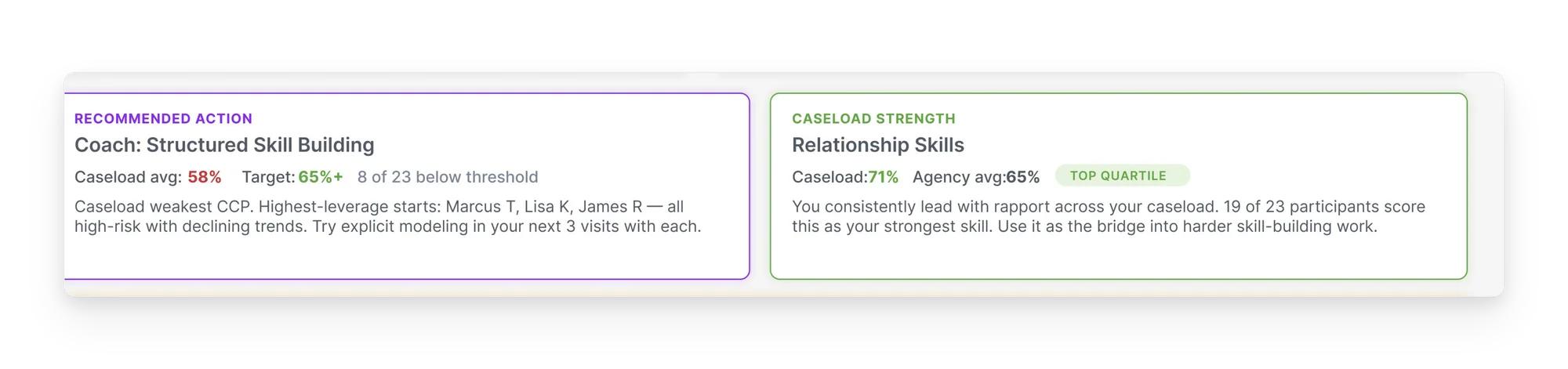
It also tracks what agencies already ask officers to track and count by hand. Whether the visit hit a four to one ratio of reinforcement to sanctions, with the actual examples. Where an open ended question would have opened the conversation, with alternative phrasing. Officers in some states are required to report that ratio, so the manual step goes away.
Every finding carries the moment it came from. Click it and you are at that point in the transcript and the recording.
What officers say about it
"I implemented previous feedback to state the purpose of the meeting. I saw my client's shoulders relax. When I was walking him out, I said, 'Does it feel better when I give you a heads up at the beginning of the meeting?' And he said, 'I liked that.'"
"In the beginning, it shows what you did well. I like that you put it up front. We have to give positive reinforcement to our clients, and we need that too."
"It is ingrained in us that we have to check so many boxes every appointment, but this shows me all the different ones, and some I didn't even recognize I was doing."
"It opens up your eyes to different ways to have a conversation, or different questions you can ask. Things that quite honestly I never would have thought of."
The officer who picked up the stated agenda and watched the room change has nine years on the job. Worth saying out loud, because the first assumption people make is that this is a tool for new officers.
Read next
See it on your own caseload
Book a 30-minute operating briefing. We will show you what Intelligence sees on a caseload like yours.
Book a Demo Run the ROI numbers