What agency leaders can’t see today
A director can report caseloads, contacts and violations. What happens inside the visits, which officers need help and which cases are slipping usually stays out of view until it turns into a revocation.
Ask a supervision director how the agency is doing and you’ll get solid numbers. Caseload sizes, contacts completed, drug tests, violations, closures. They come out of the case management system every month.
Ask what happened inside last month’s visits, which officers most need coaching and in what, or which participants are starting to slip, and at most agencies the honest answer is that nobody knows yet. It shows up later as a revocation, an audit finding or a resignation.
Leaders can’t change what they can’t see. These are the blind spots agency leaders describe to us most, and what it looks like when they close.
Quality review sees about one file per officer per month
At most agencies, quality assurance means a supervisor reading a sample. A state deputy secretary of corrections described the standard to us: supervisors audit one file per officer per month. When she saw every recorded visit reviewed and rolled up in one view, her reaction was immediate. “I have to get this for parole.” What she wanted was supervisors spending their time coaching officers instead of counting files.
A monthly file review sees a sliver of the work
Quality review today
Every recorded visit
The problem with a one-file sample is coverage. The file is reviewed weeks later, it’s often picked by the officer being reviewed, and it shows the note about the visit rather than the visit.
The early signs of a failing case sit in data nobody reads
Revocations rarely come out of nowhere. In a RePath Labs study of 65 Missouri pretrial agencies, the share of check-ins a person completed in their first 30 days was an early sign of how their case would close. People also pulled back before an unsuccessful closure: their last completed check-in came a median of 56 days before the case closed, against 3 days for cases that closed successfully.
What the first month of check-ins says about how a case ends
That is a window to act. Most agencies miss it because the signal sits in check-in logs that no one has time to read across a whole caseload.
Training is the biggest bet with the least visibility
Agencies spend real money training officers in motivational interviewing and core correctional practices. The research says the investment pays off when officers use the skills in real conversations, and much less when they don’t. We walked through that evidence in Community supervision is entering an evidence-led era.
Officers see the gap better than anyone. A juvenile officer in Kansas, after trying feedback on her own recorded visits:
“I love how you can get feedback for MI skills and tips for improvement... Many people have a very basic knowledge of MI skills and do not get a chance to practice it with feedback... I really appreciate that it shows the strengths of the officer as well as the areas to improve on.”
What it looks like when leaders can see
RePath Intelligence is built on the visits themselves. Officers record visits with Visit Assist. Intelligence reviews every recorded contact against research-backed supervision standards and rolls the results up by visit, officer, district and agency.
See it
Every recorded contact instead of a monthly sample: where practice is strong, where it’s thin, and where it changed.
Measure it
One supervision quality score from the single visit up to the whole agency, so a director can compare districts and a supervisor can follow an officer’s trend.
Coach it
Officers get private feedback on their own visits, and it starts with what they did well. A community corrections officer with twenty years in the job said it “opens up your eyes to different ways to have a conversation with your client or different questions you can ask. Things that I, a lot of times, quite honestly, never would have thought.”
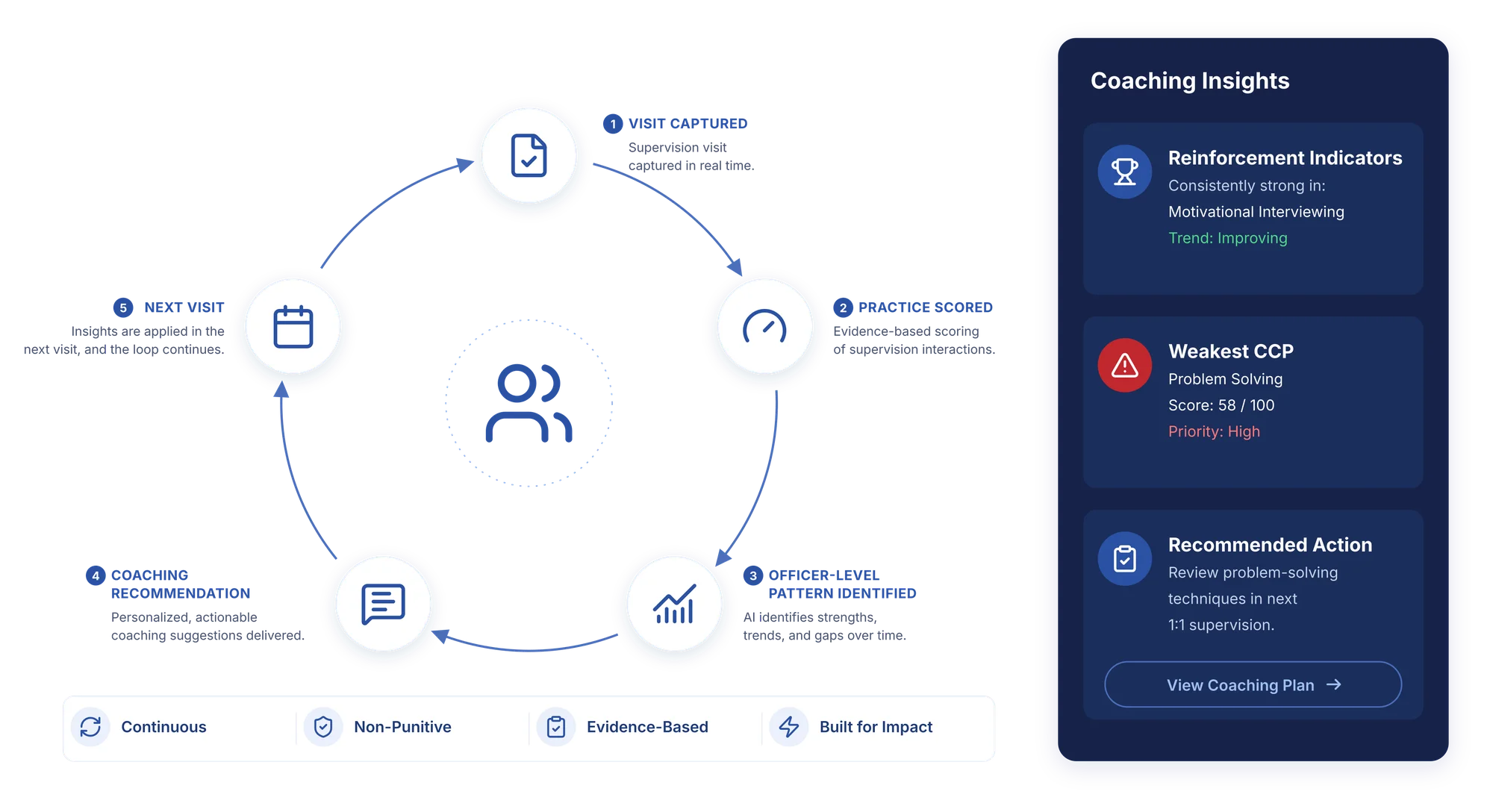
The coaching reaches participants too. One juvenile officer took a tip from her feedback and opened her next meeting by telling the young man what it was for. She watched his shoulders relax. Walking him out, she asked whether the heads-up helped. “I liked that,” he said.
Improve it
Across one state, the share of cases on RePath that ended in revocation dropped by almost half in three years.
Cases on RePath ending in revocation, one state
Three questions to ask before your next budget hearing
- What share of supervision contacts did anyone review last quarter, and who chose them?
- Which officers most need coaching right now, and in which skill?
- Which cases are slipping today, a month or two before they become revocations?
If answering those takes a week of pulling files, that’s the blind spot. A youth services director in Kansas described the change once her agency could answer them:
“Everything RePath is doing is making our lives easier instead of harder, and giving us the sorely needed data we’ve been lacking.”
Read next
See what your agency can’t see today
A 30-minute walkthrough of RePath Intelligence on an agency like yours.
Book a Demo See RePath Intelligence