What Visit Assist does, and what the officer still decides
Visit Assist writes the note. It doesn't make any decisions about the person. Here's exactly where the line sits, and why.
Every agency that looks at Visit Assist asks some version of the same question. Is this replacing officer judgment? What if it makes something up? Whose note is it?
Those are the right questions, and "the officer is always in control" isn't a good enough answer. So here's the actual split, line by line.
Visit Assist does
- Records the visit
- Transcribes it and labels who said what
- Drafts the summary
- Checks the draft against the transcript
- Pulls out appointments and homework
- Keeps the recording, transcript and approved note
The officer decides
- Whether to record
- How the visit goes
- What the note says
- What it means for the case
- When it goes into case management
- Whether the record gets used later
What Visit Assist does
The officer taps record before the conversation starts. It works in the office, in the field, on a phone call or on a RePath video call. If there's no signal, the recording waits on the phone and uploads later. Officers at one Kansas recovery court start recording before the meeting even begins, instead of waiting on a laptop.
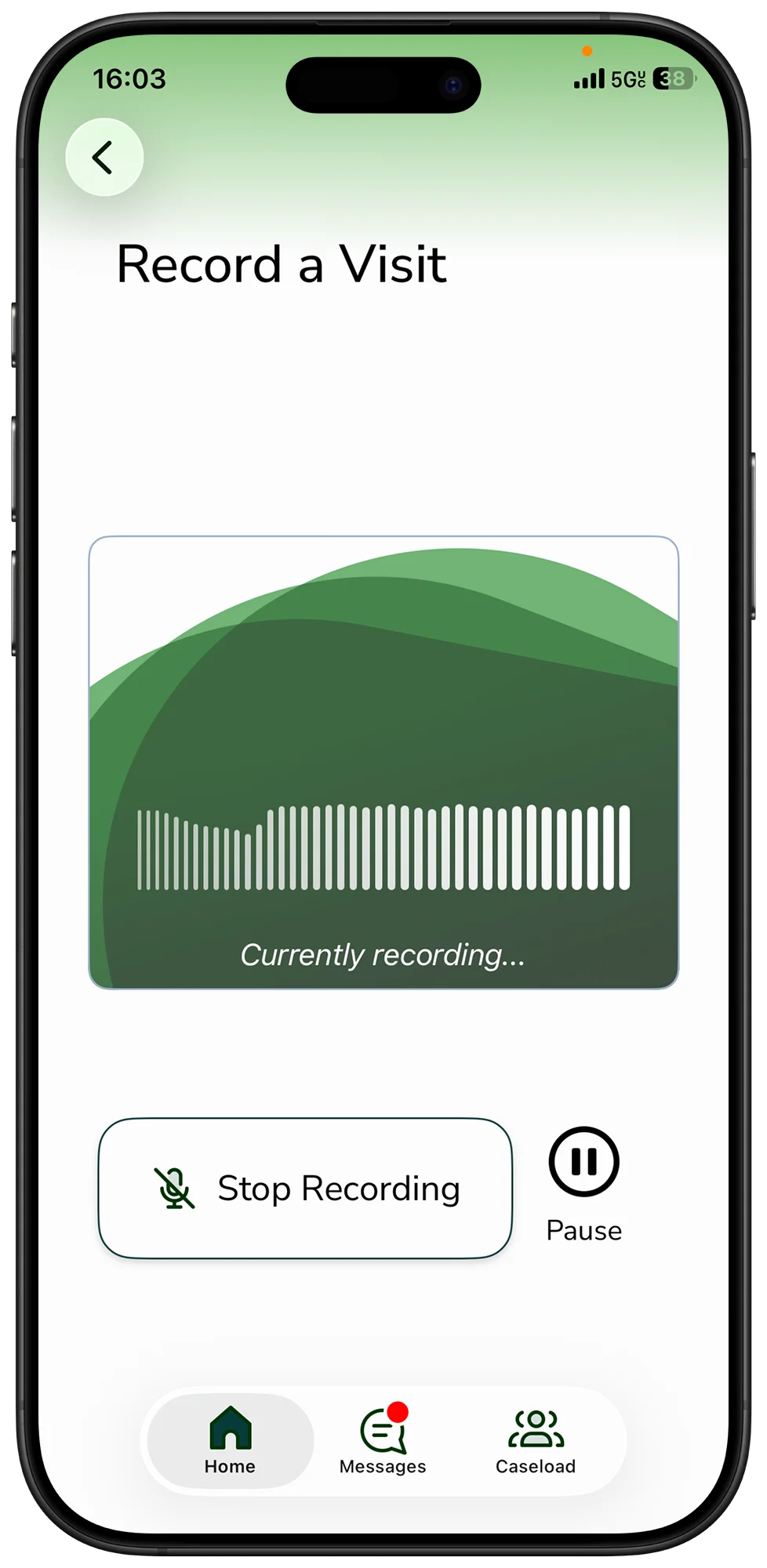
From the recording, Visit Assist:
- transcribes the conversation and labels who said what
- drafts a summary organized the way a supervision note is: employment, housing, family, school, conditions of supervision
- checks that draft against the transcript and rewrites anything the transcript doesn't back up
- pulls out appointments and homework, so "bring a pay stub next week" becomes a tracked reminder instead of a line nobody rereads
- writes the note in English or Spanish
The check against the transcript is the part most people don't know about. It's the answer to "what if it makes something up."
That review is the officer's part, and it's what the rest of this article is about.
What the officer still decides
Whether to record. Recording follows the agency's policy and state law, and it's set up with the agency before the first visit. The app doesn't start on its own.
How the visit goes. Visit Assist doesn't prompt the officer or suggest questions. It just listens. Officers say the first thing they notice is that they're looking at the person instead of a screen.
What the note says. The officer reads the draft, fixes what's wrong and approves it. Nothing gets filed until they do. Edits are tracked, so a supervisor or auditor can see what the software drafted and what the officer changed.
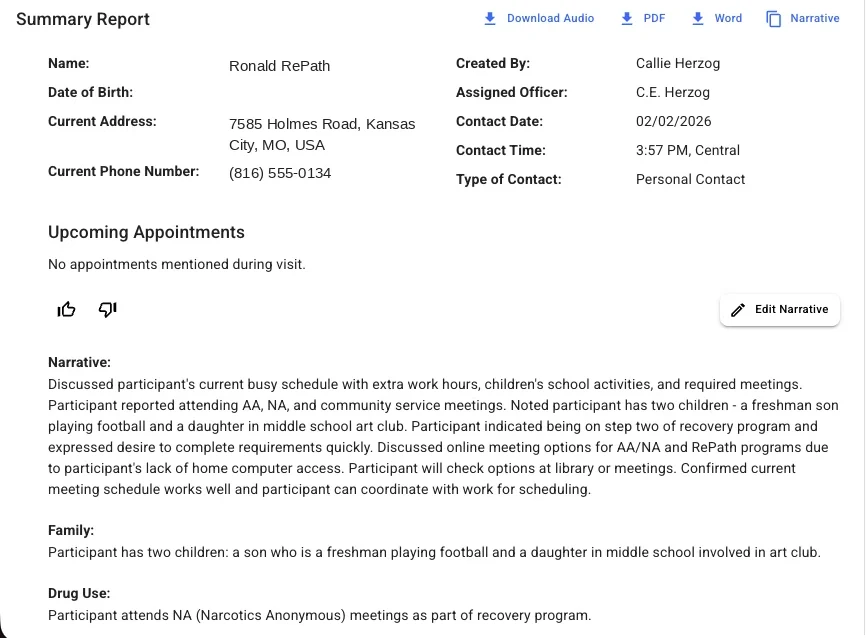
What it means. This is the one that matters. Visit Assist doesn't score risk, flag noncompliance, recommend a sanction or suggest moving someone up or down a supervision level. The officer reads the note and makes those calls, the same as when they wrote it by hand. They just do it ten minutes after the visit instead of at nine at night.
When it goes into case management. The officer sends the approved note to the agency's case management system. For most agencies today that's an export or a copy and paste, and it's a direct push where an integration is built. RePath works alongside the case management system you already have.
Whether the record gets used later. Pulling a recording for a hearing, an audit or a dispute is the agency's call. The platform doesn't do it on a schedule.
The line is what makes the note hold up
Court. A case note can end up as testimony. If the officer can't stand behind every sentence, the note is a liability, and software that wrote conclusions the officer never reached would be worse than no software at all. One Kansas officer said she wouldn't feel awkward reading a Visit Assist note on the stand. That's the standard we build to.
Audits. When a state reviewer asks what happened in a visit, an agency with the recording, the transcript and the approved note can just show them. A Texas juvenile probation chief answered a state audit finding on case note quality that way. A Kansas juvenile services director was asked to send recordings of staff visits for a statewide quality review and realized she already had every one.
Protection. When a conversation about a violation turns into he said, she said, the officer has every word. The record protects the officer as much as the participant.
"It just feels authentic. It feels like I'm present... I didn't have to write any of that down knowing that it was going to be caught and could really deescalate her and calm her down."
Once officers trust the note, they record more
After a few weeks, officers start recording more than visits: a call from a parent, a Zoom hearing, a staffing with a facility, an assessment. An officer at a Kansas recovery court called to check on someone who was struggling. He shut his door, hit record and put the call on speaker. As he put it, "In those conversations it's hard to take notes and actually be there for someone."
They prep differently too. Before a visit, they open the last approved summary and the homework list instead of scrolling the whole chrono. If someone covers a caseload for a week, the record is already current.
All of that depends on officers trusting what's in the note. They trust it because they read it, fixed it and signed it.
Three questions to ask any vendor
- Can the officer edit the draft, and are the edits tracked?
- Do you keep the recording and transcript, or does the summary replace them?
- Does the summary ever include something the officer didn't say or see, like a risk score or a recommendation?
For Visit Assist, the answers are yes, yes and no. Ask every vendor the same three.
Officers across our agencies get 8 to 10 hours a week back. That time comes out of the typing. The judgment stays with the officer.
Read next
Want to see it on your caseload?
Book a 20-minute officer-hours call. We will show you the math on your numbers, not ours.
Book a Demo Run the ROI numbers